May 2–3, 2026
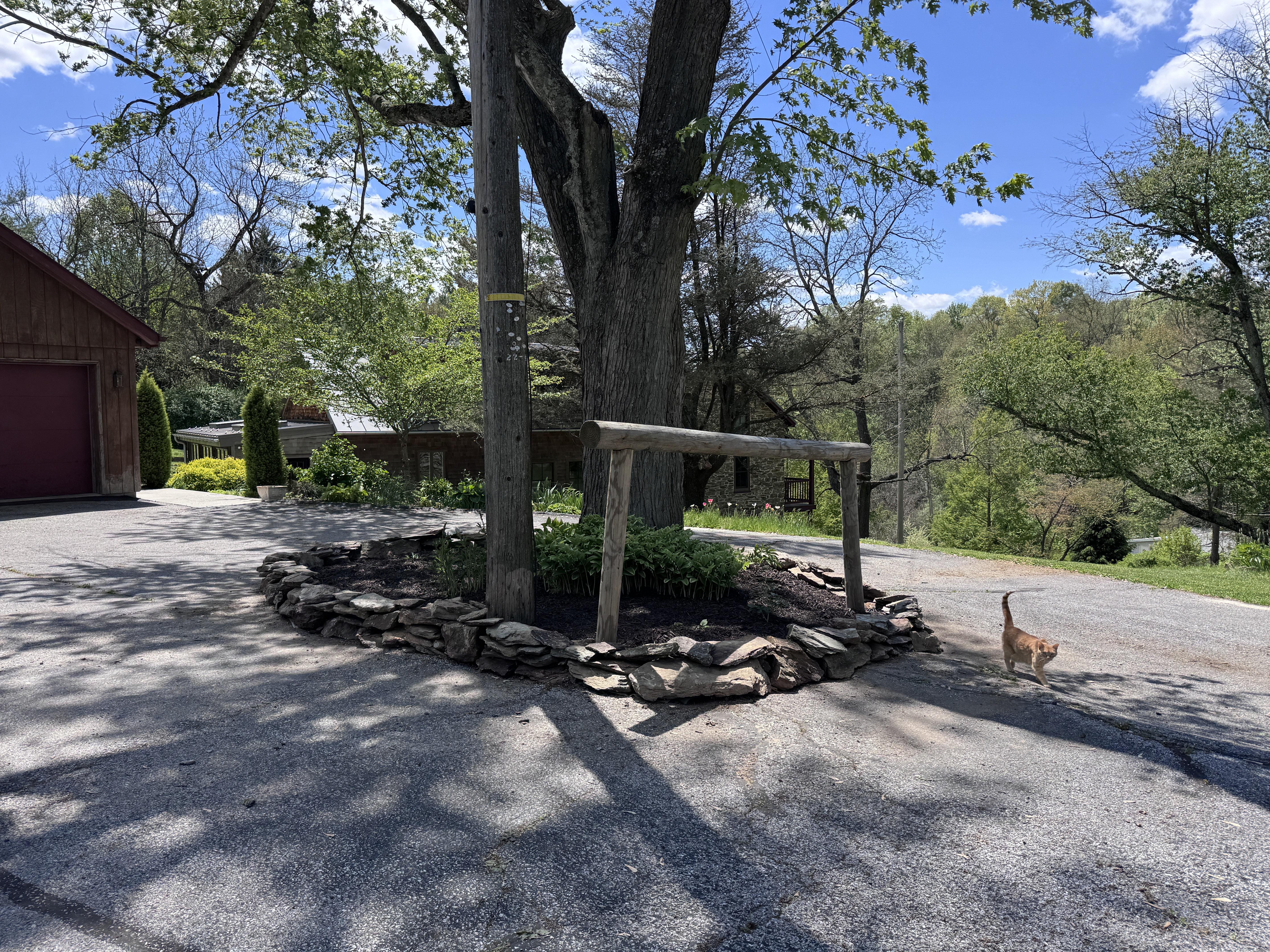
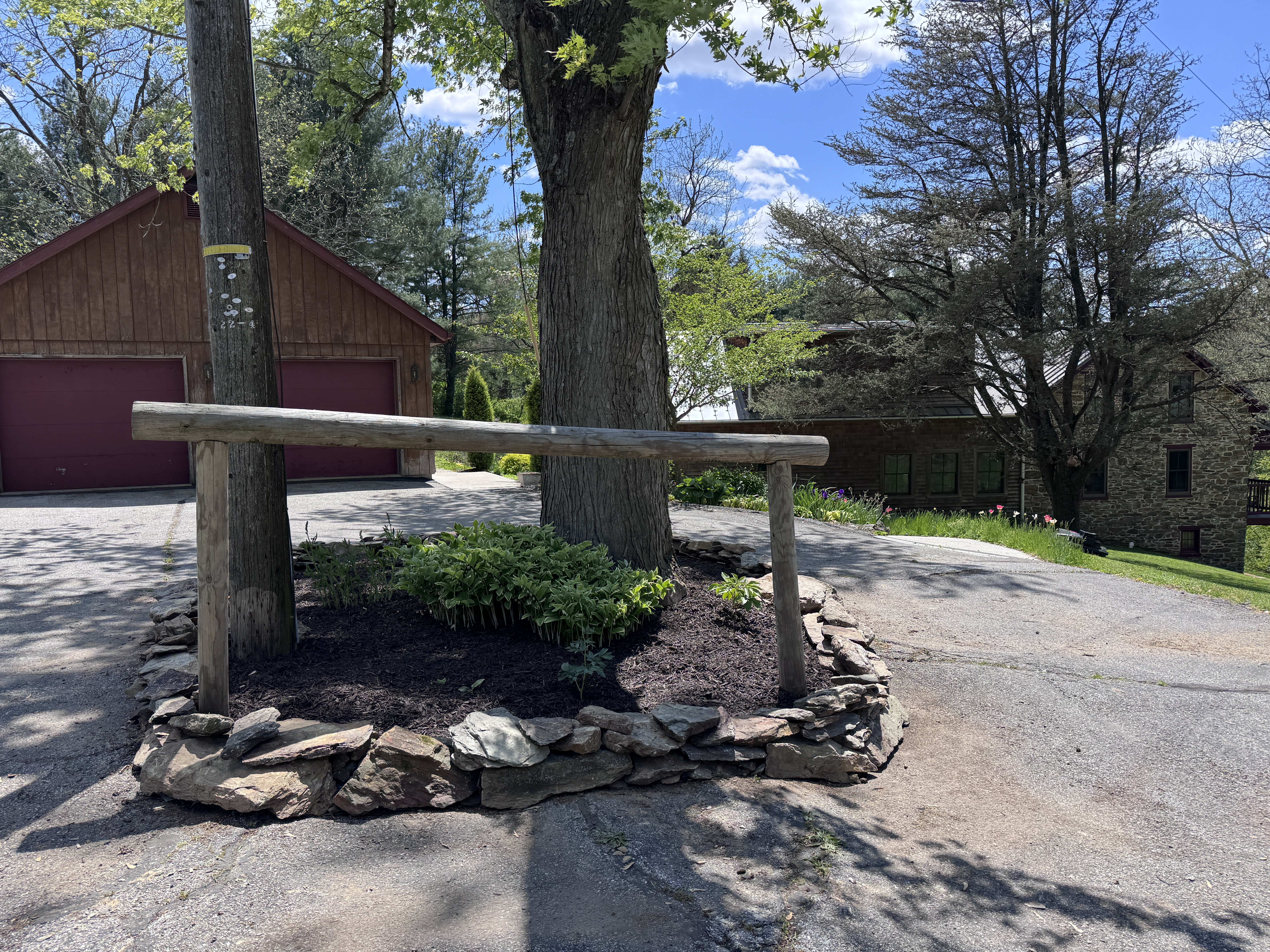
It started with a branch thirty feet up and took two days to finish: a rope saw, a tractor, a pair of sore backs, 15 bags of mulch, and enough stone hauled out of the woods to ring the island right.
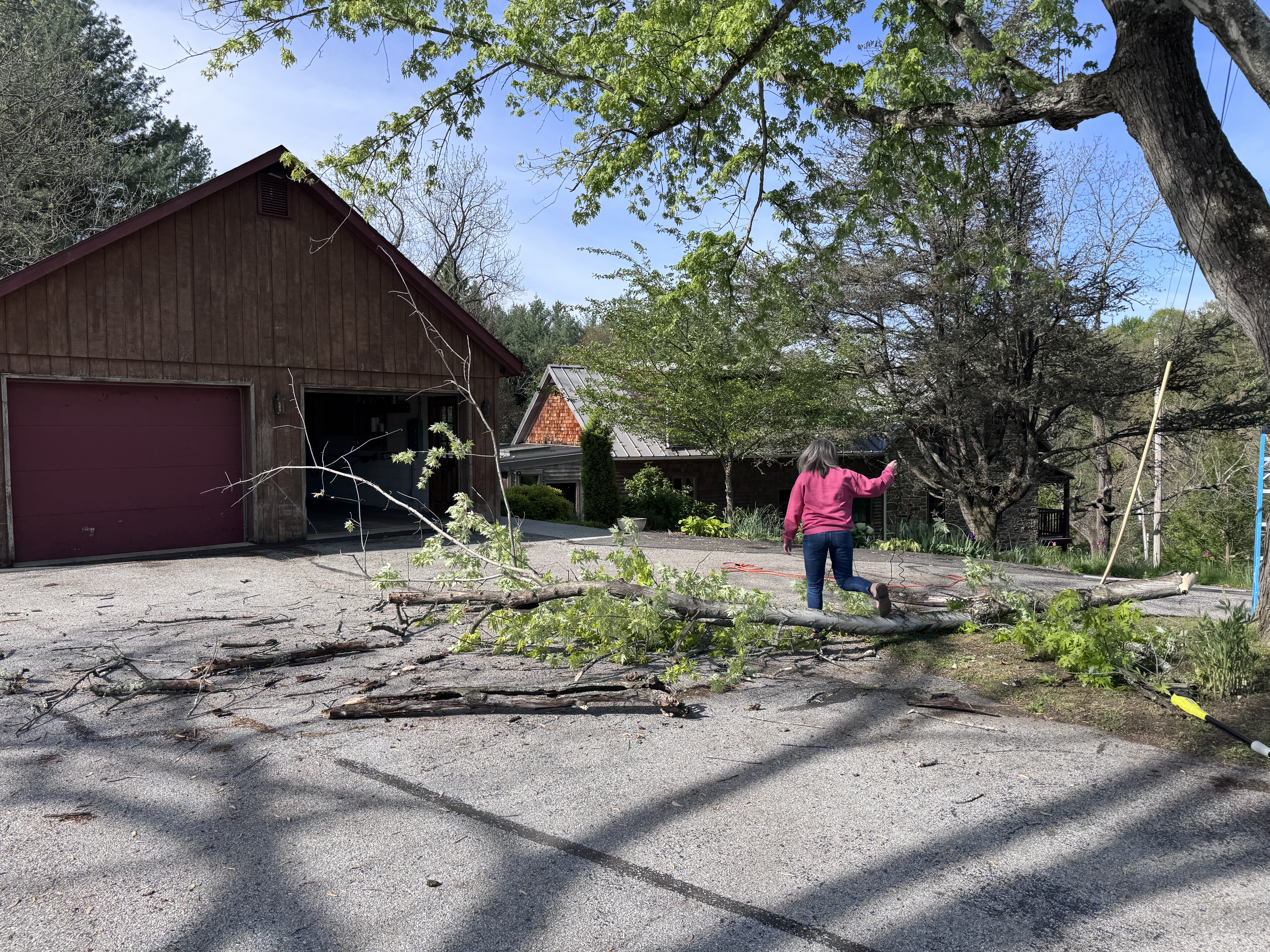
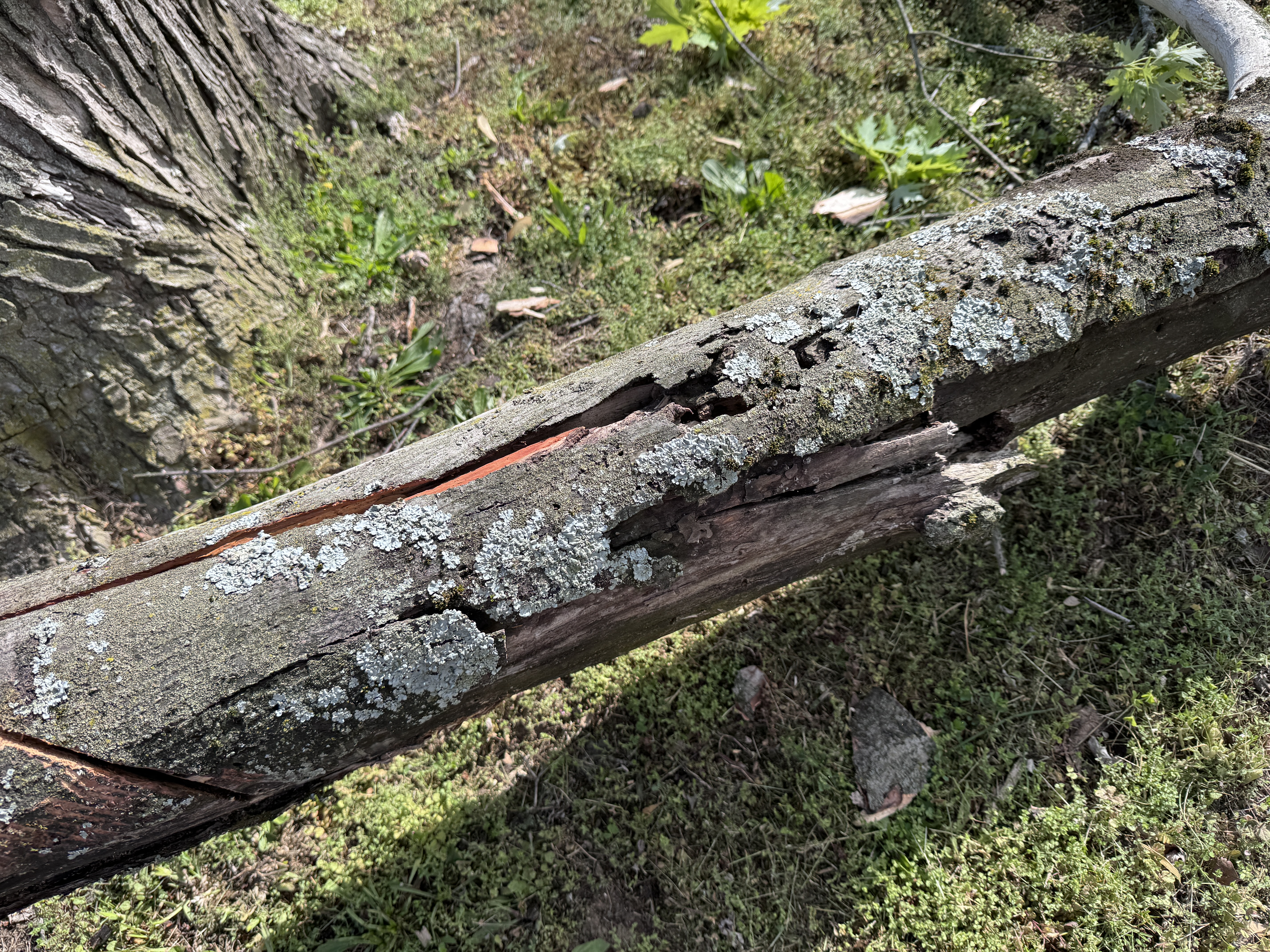
We happened to see from the driveway a long diagonal crack in a branch some thirty feet up in the old tree anchoring the island. A major limb had split along its length and was getting heavier with new spring leaves. This morning we decided to take it down.
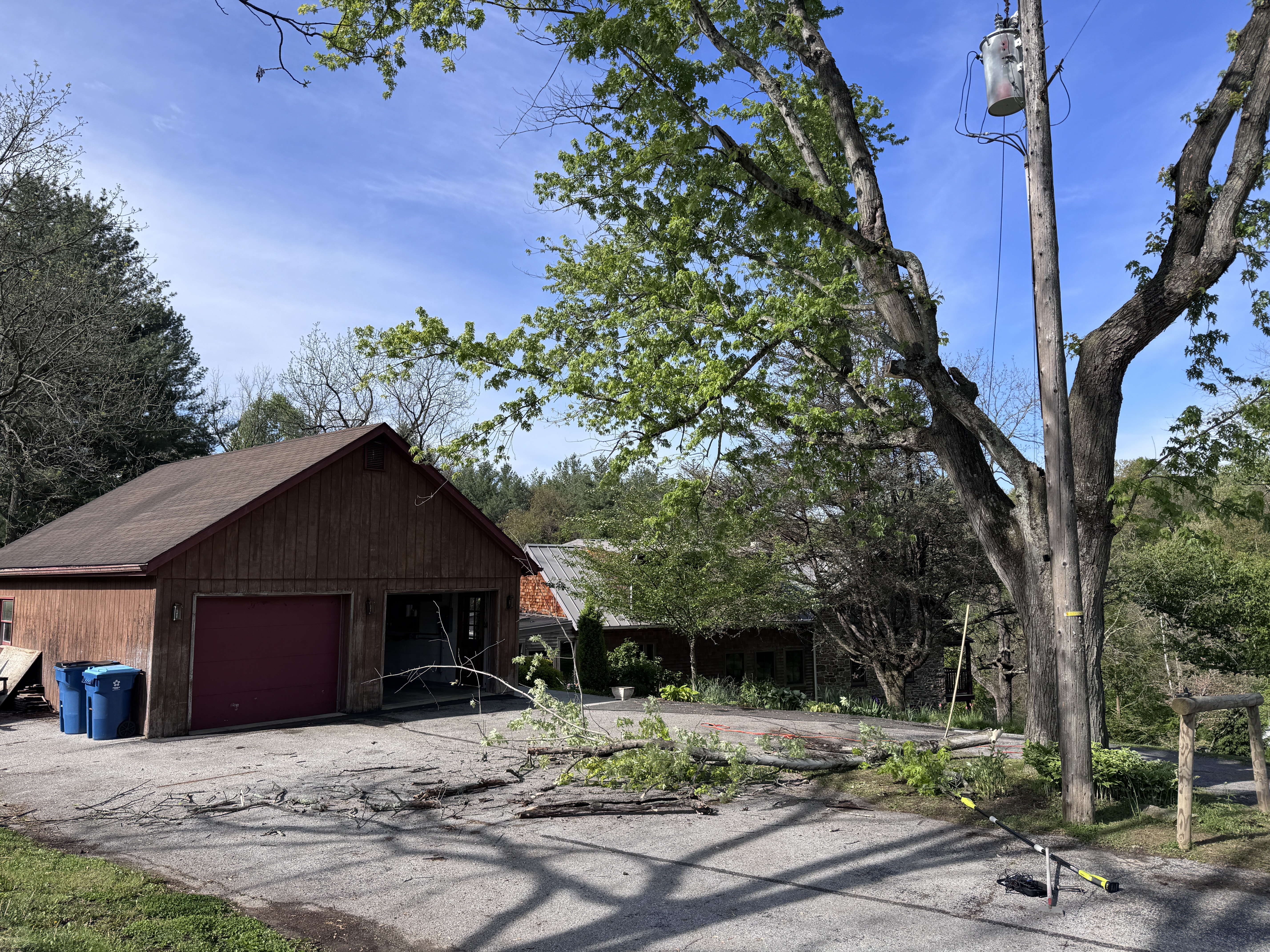
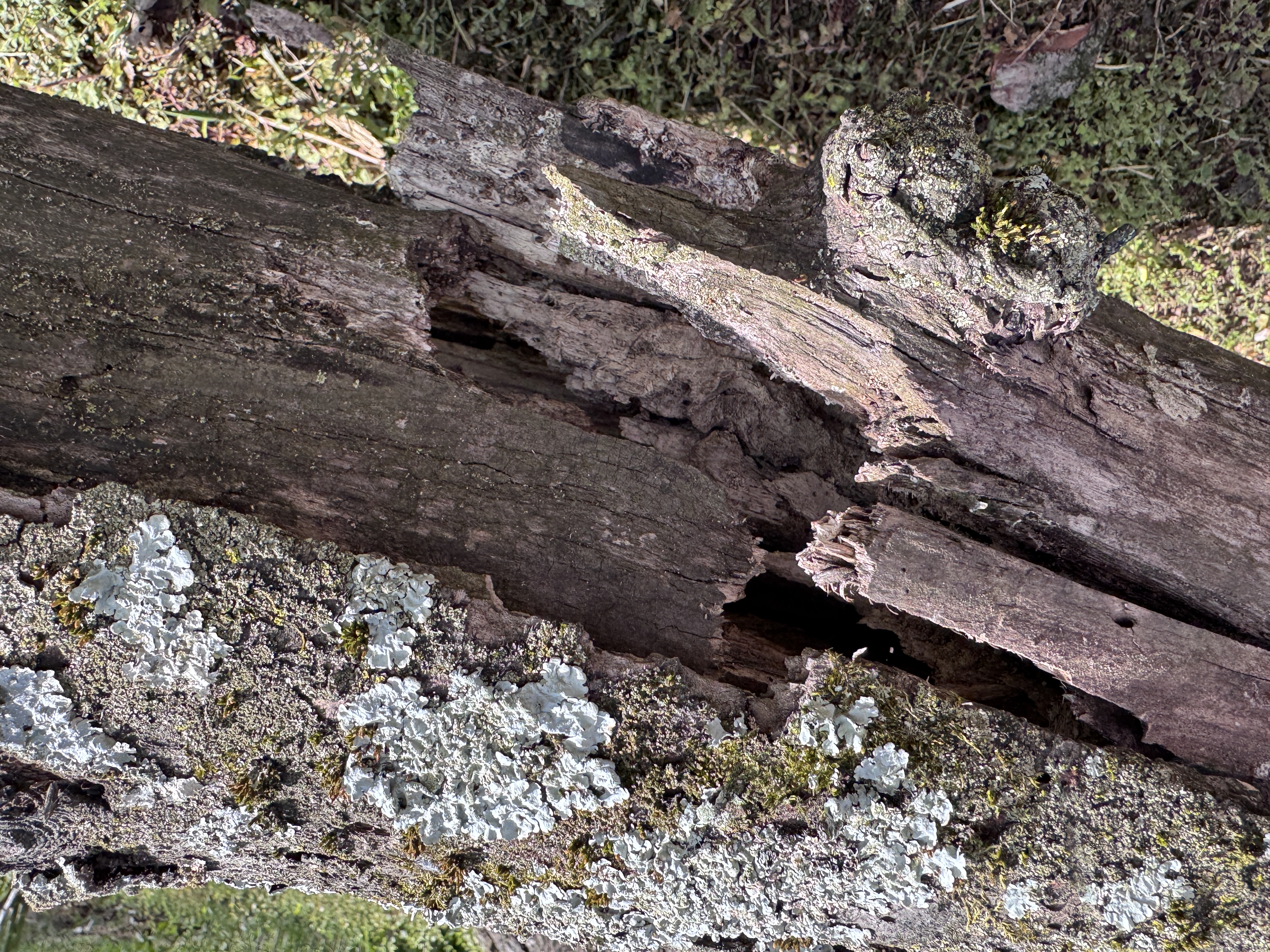
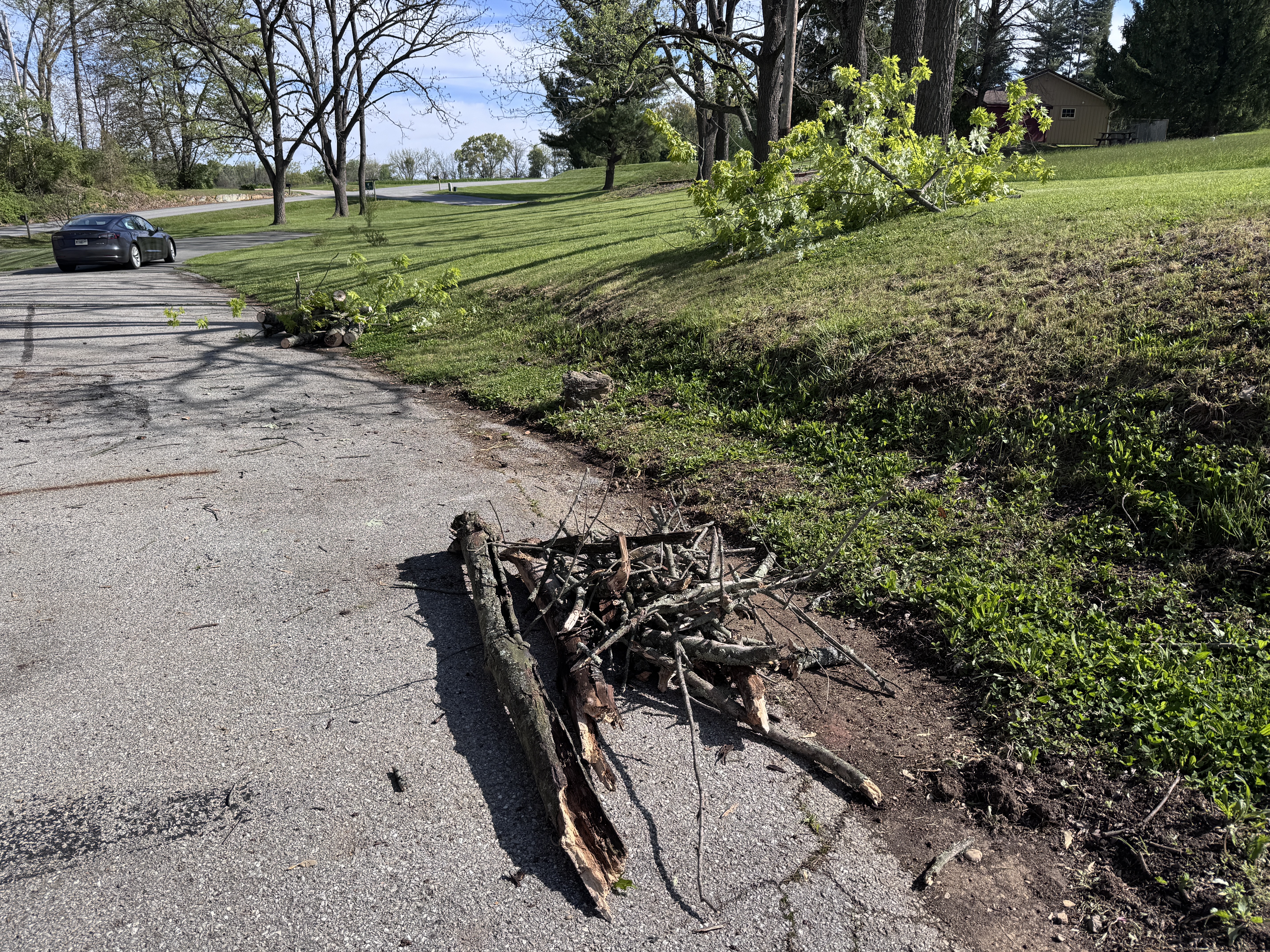
Up close, the branch told you everything. Under the gray shell of bark and lichen was orange heartwood split wide open — a crack that ran most of the limb's length. It was not going to heal. Amy and I looped a rope saw over the branch and worked it from both ends, hand over hand. Before we knew it, the limb was down in sections and piled at the dirveway's edge.
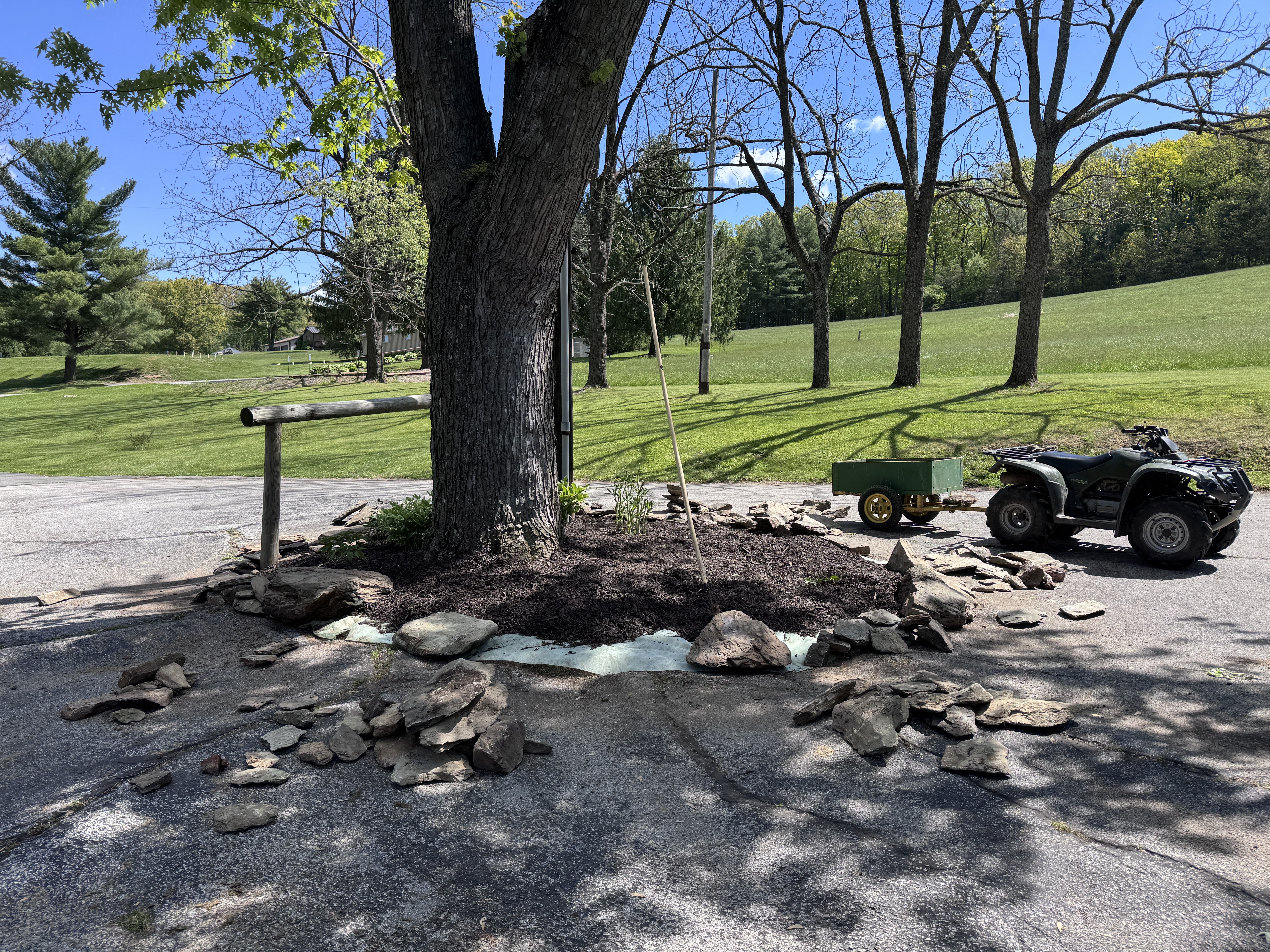
With the limb gone, the island had a bit more light. We stripped the grass along the bed line and unrolled landscape fabric across the whole island, cutting it to fit around the peonies and the other plants that had muscled their way in on their own. The cuts took patience. You can't rush a peony.
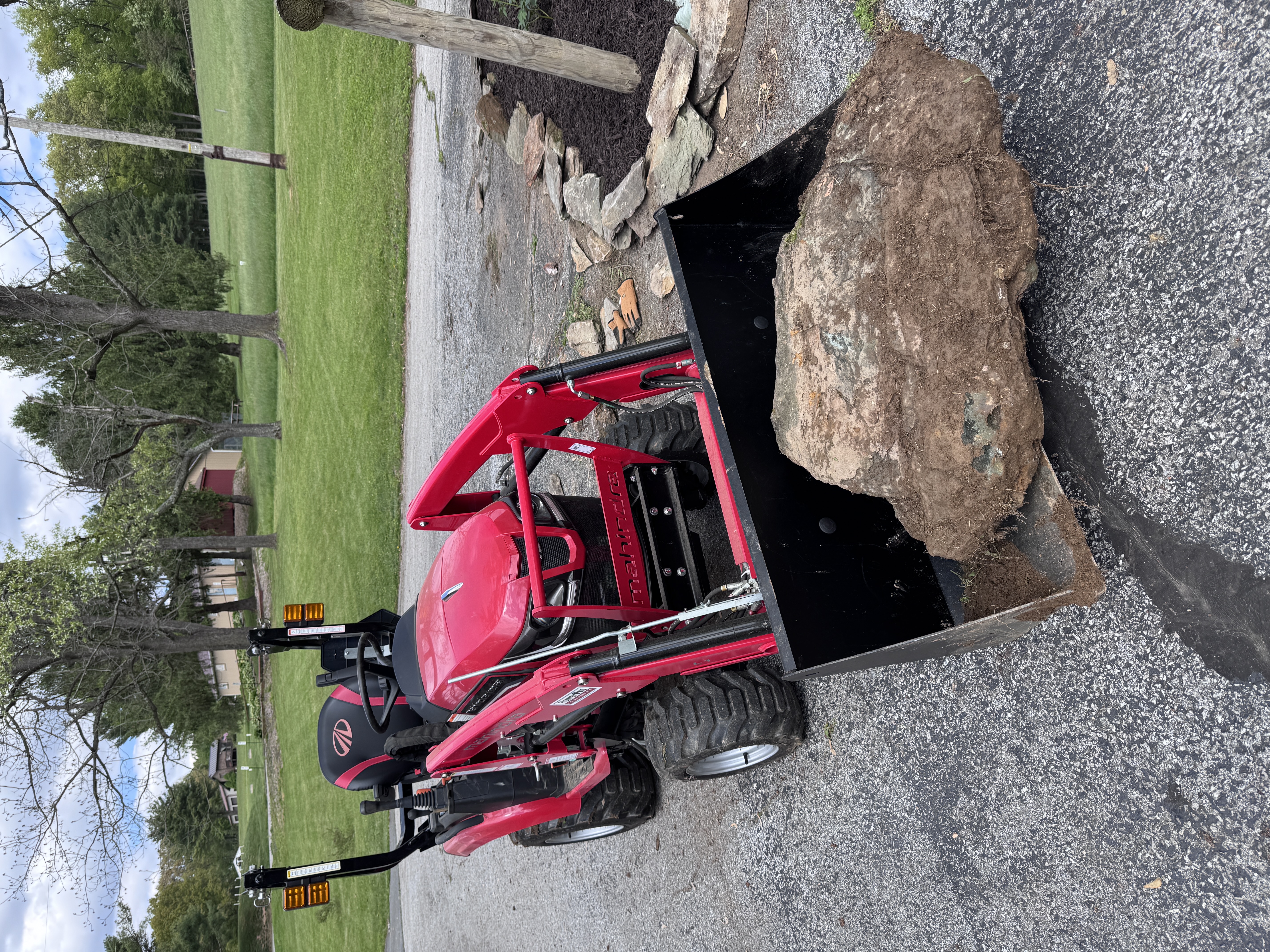
The tractor cart came out loaded with the first round of fieldstone.
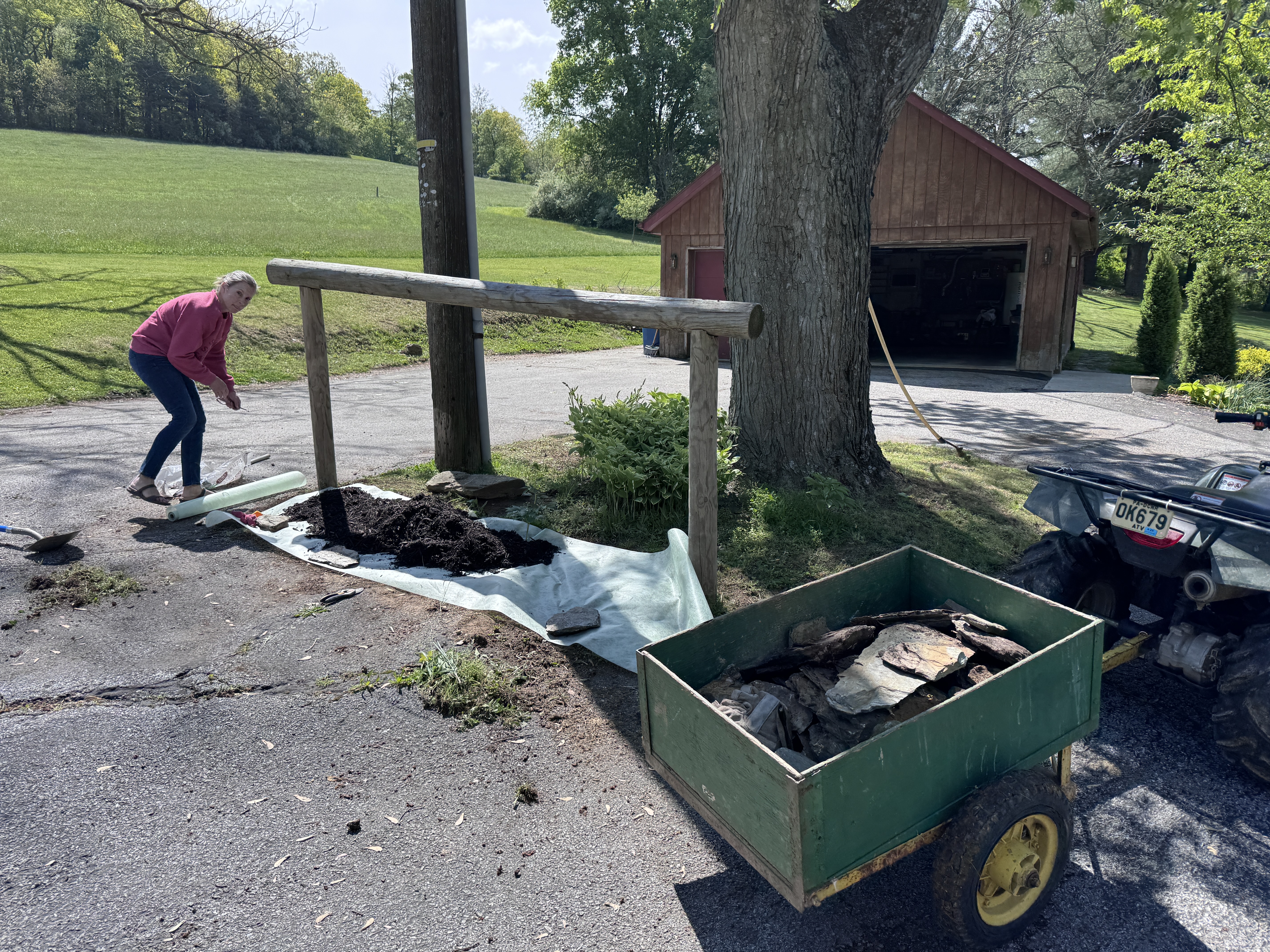
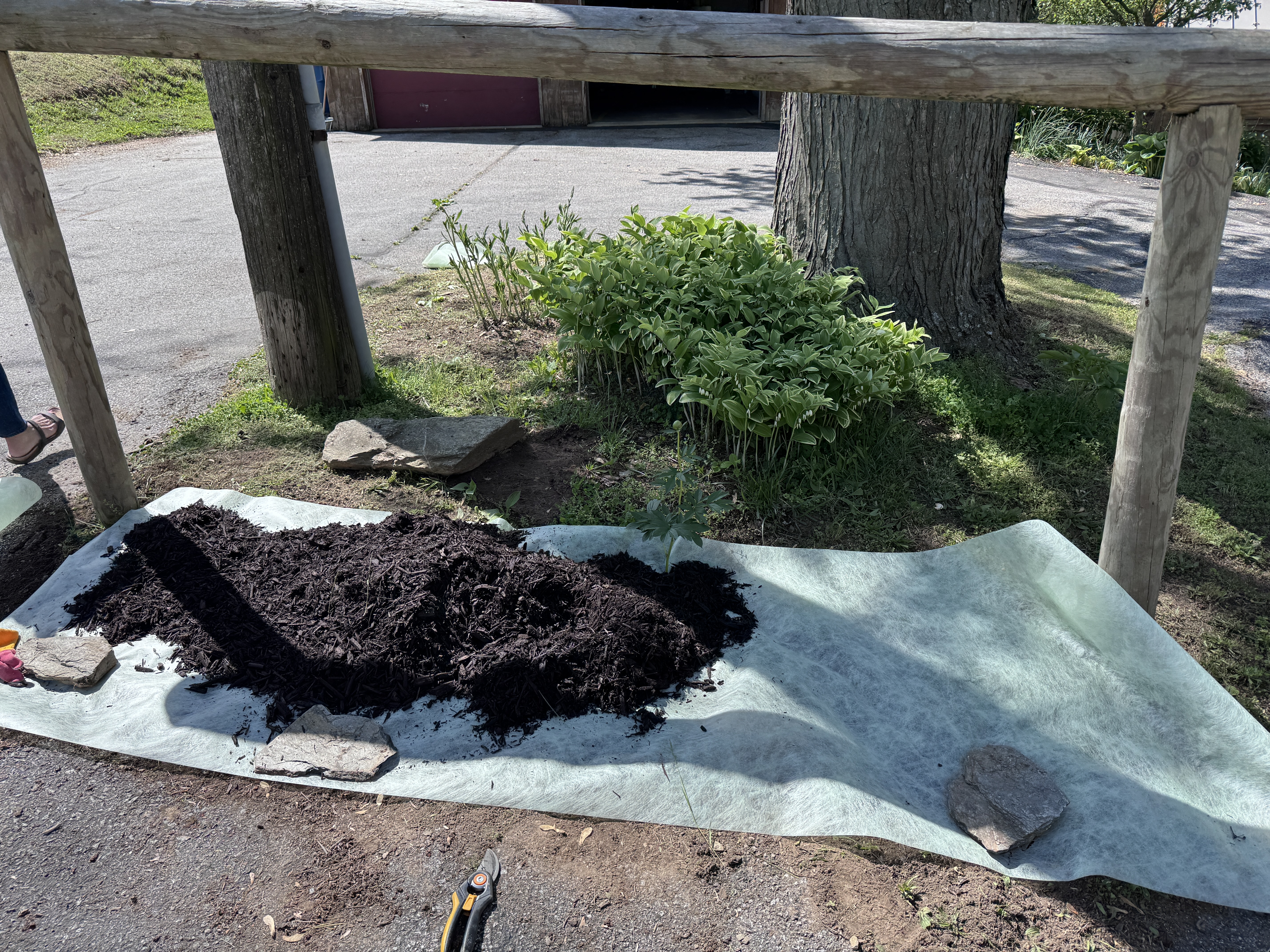
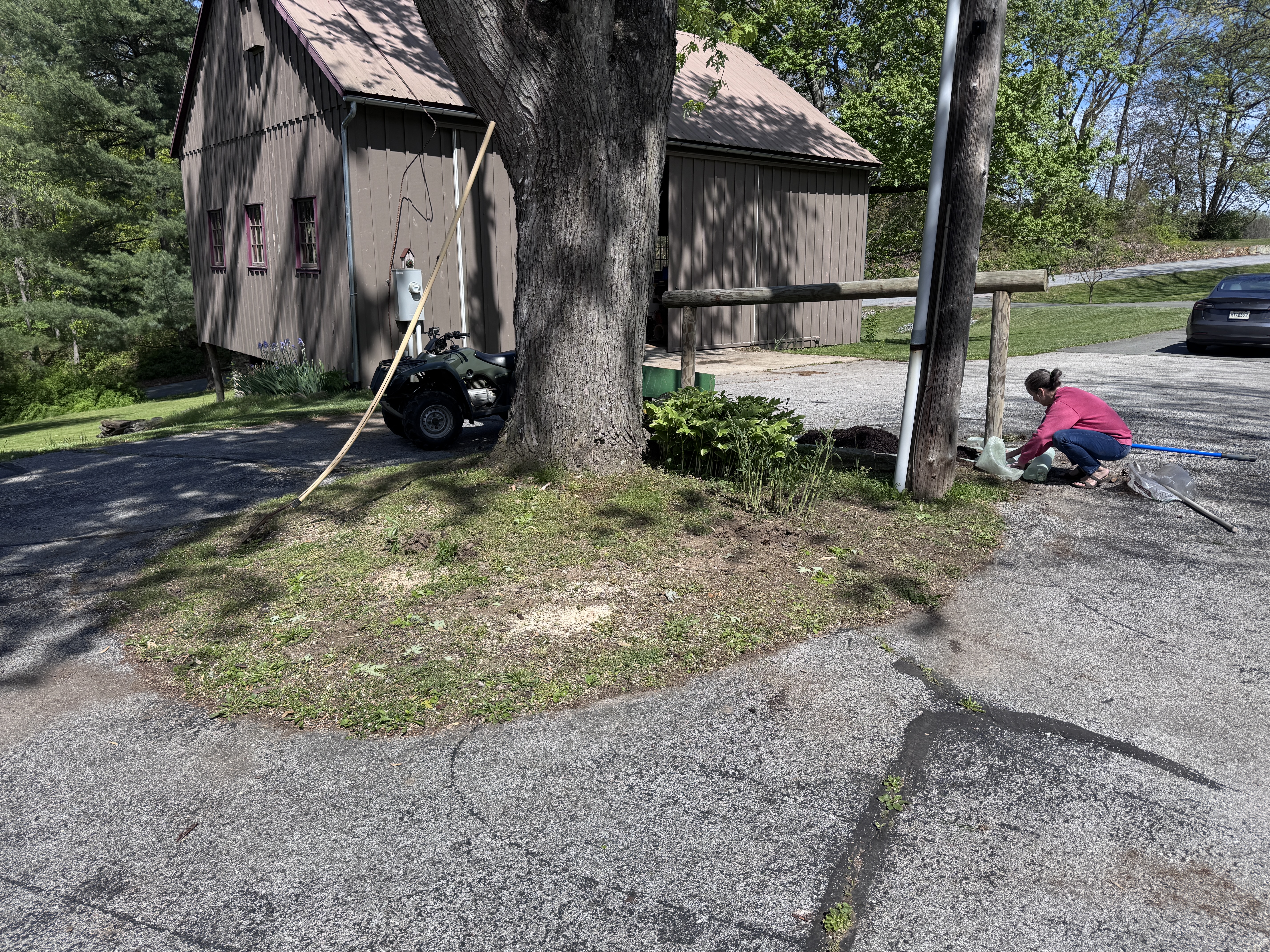
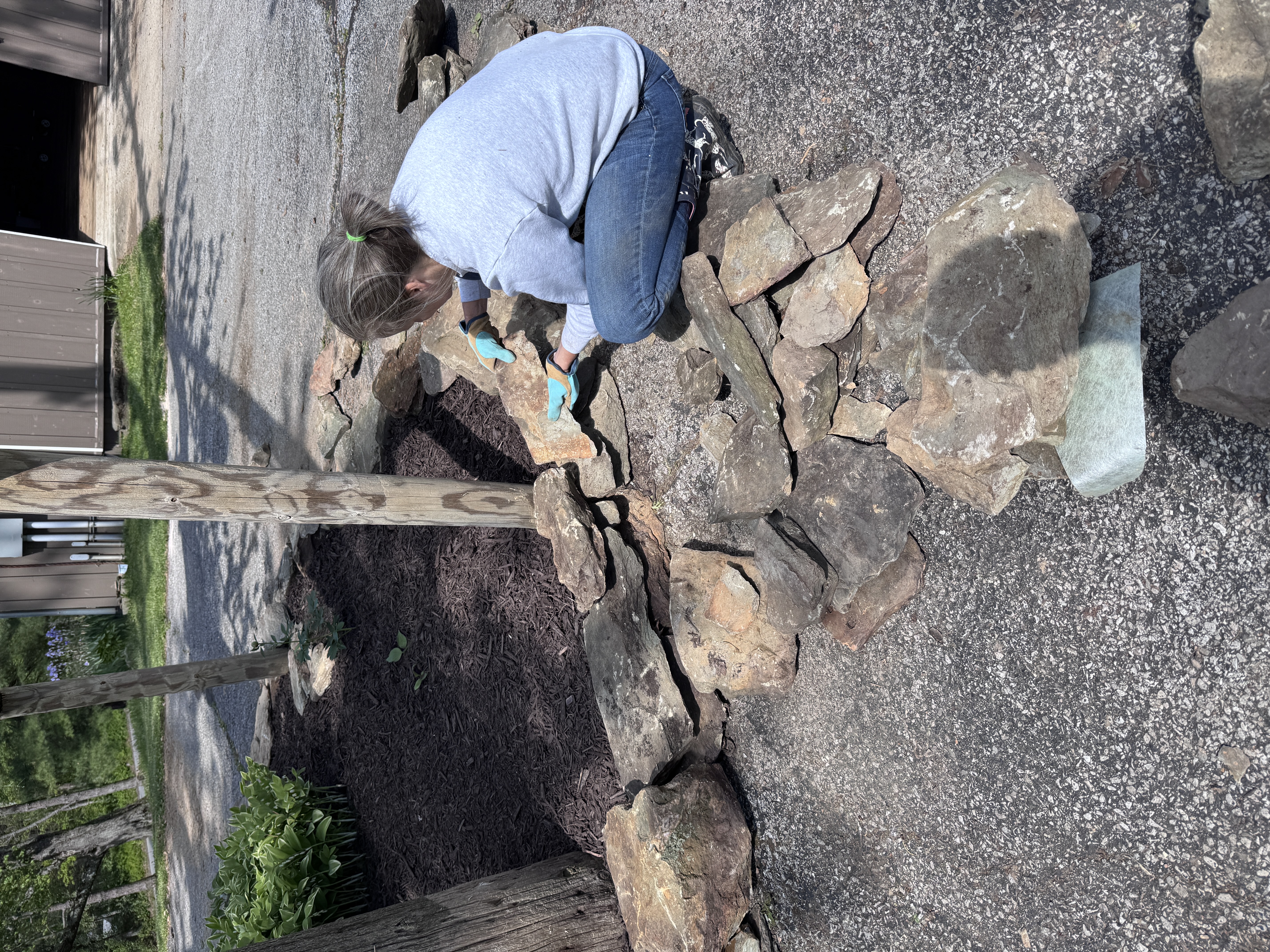
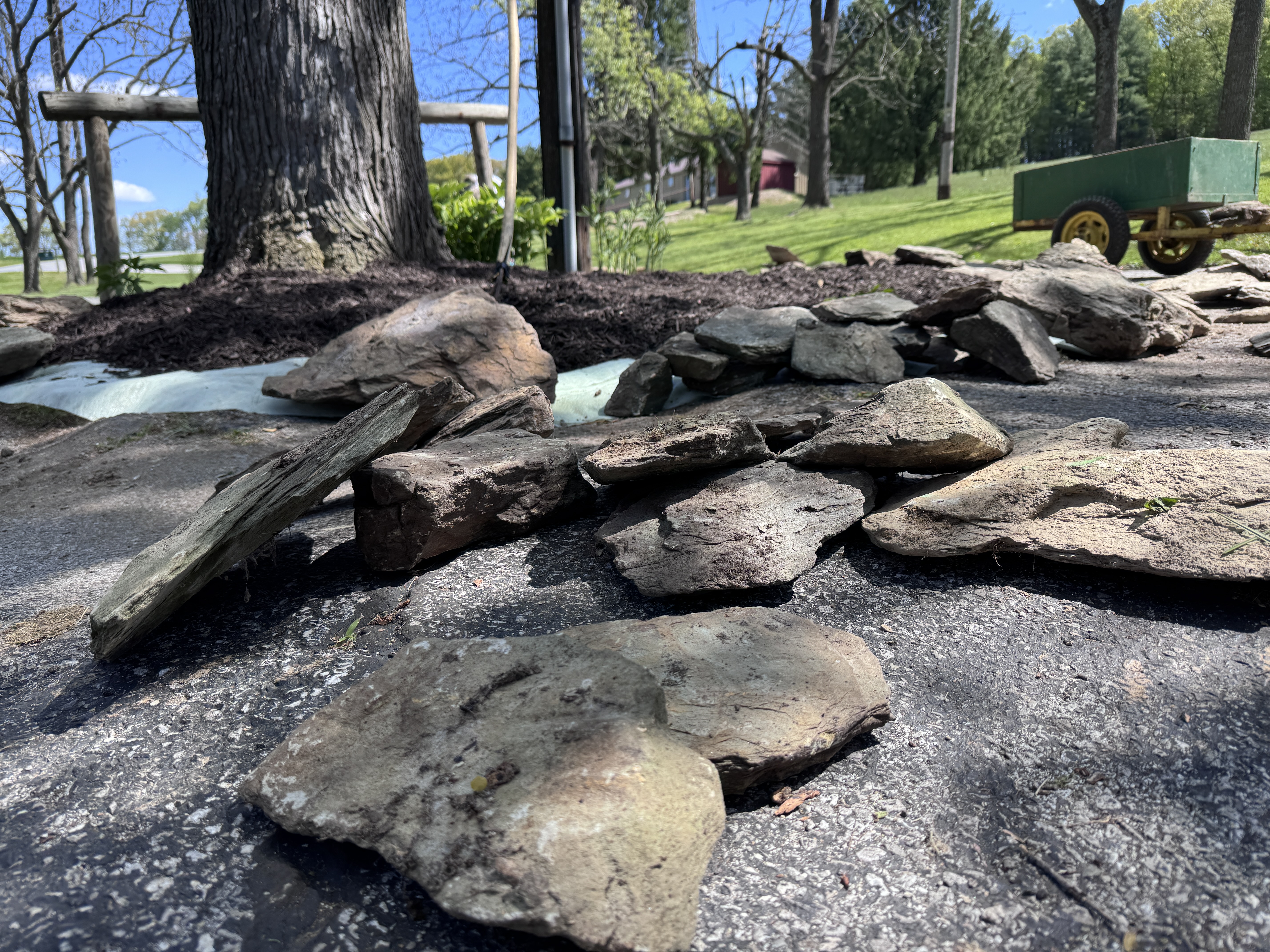
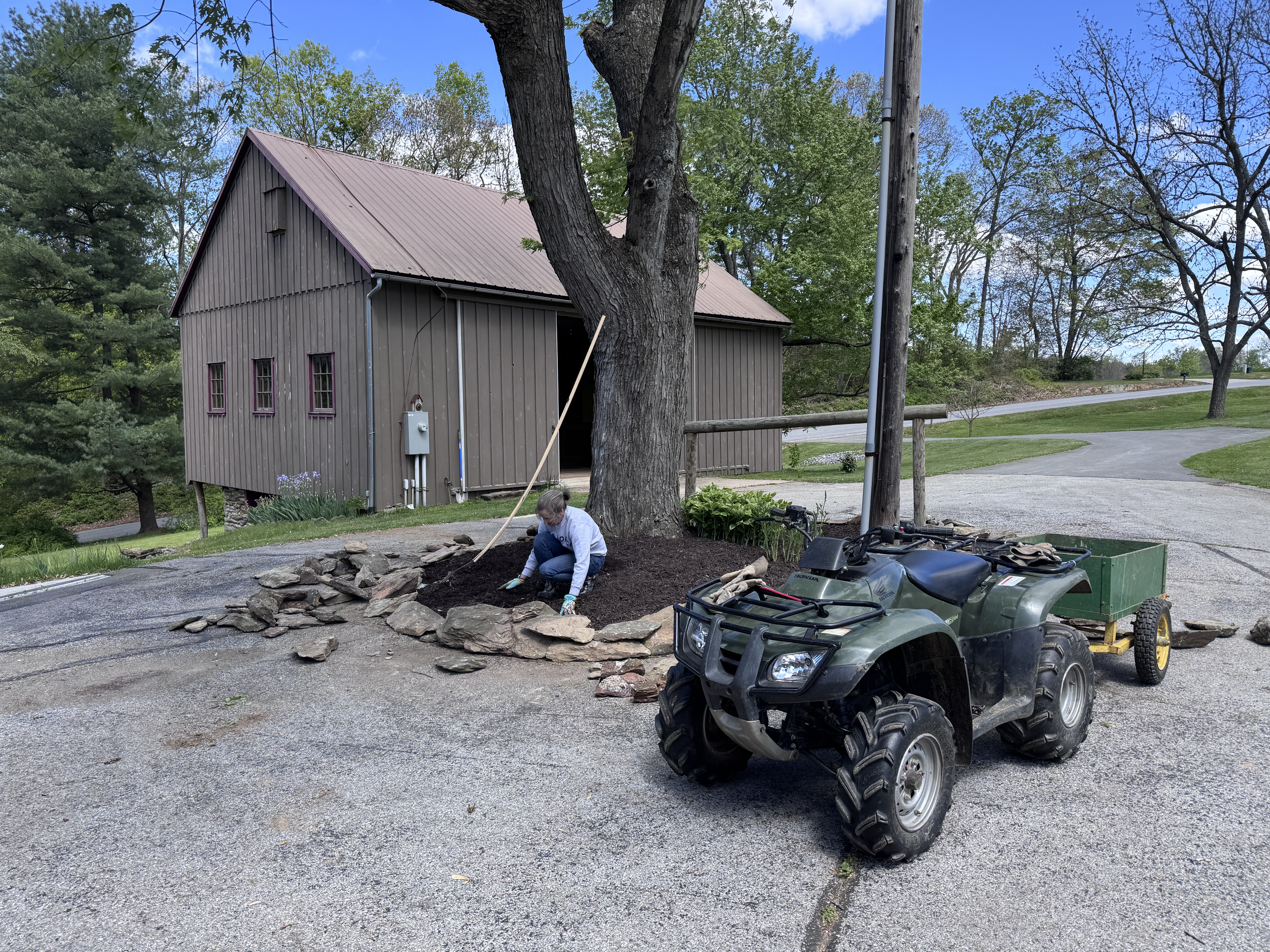
The island needed an edge -- some semi-permanence. We collected stones from the old fence lines around the property, flat-faced fieldstone, local, good for dry-stacking. We laid them one at a time, fitting each piece to its neighbor without mortar. The ring went down slow, stone by stone, worked around the arc of the island until it closed.
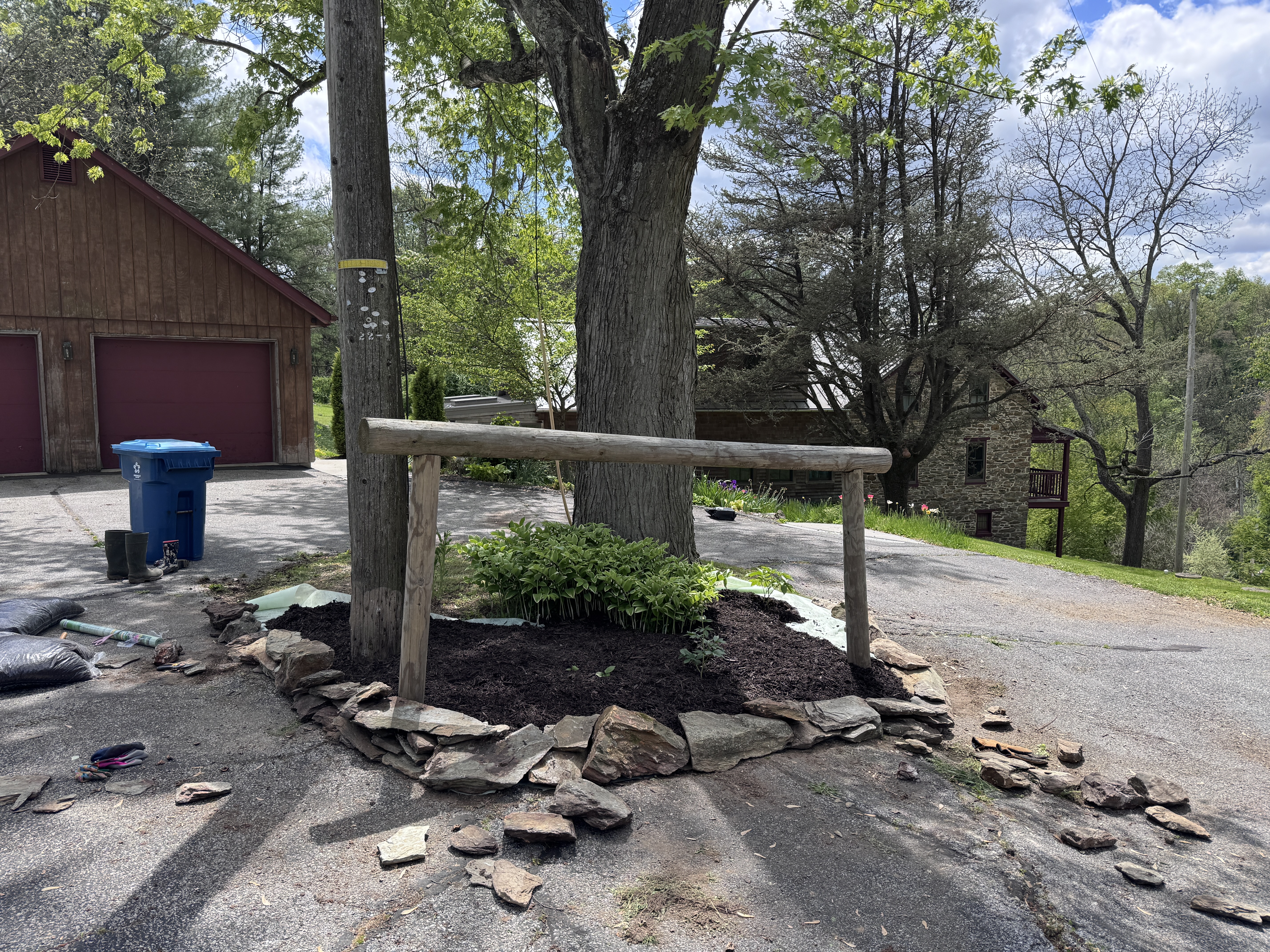
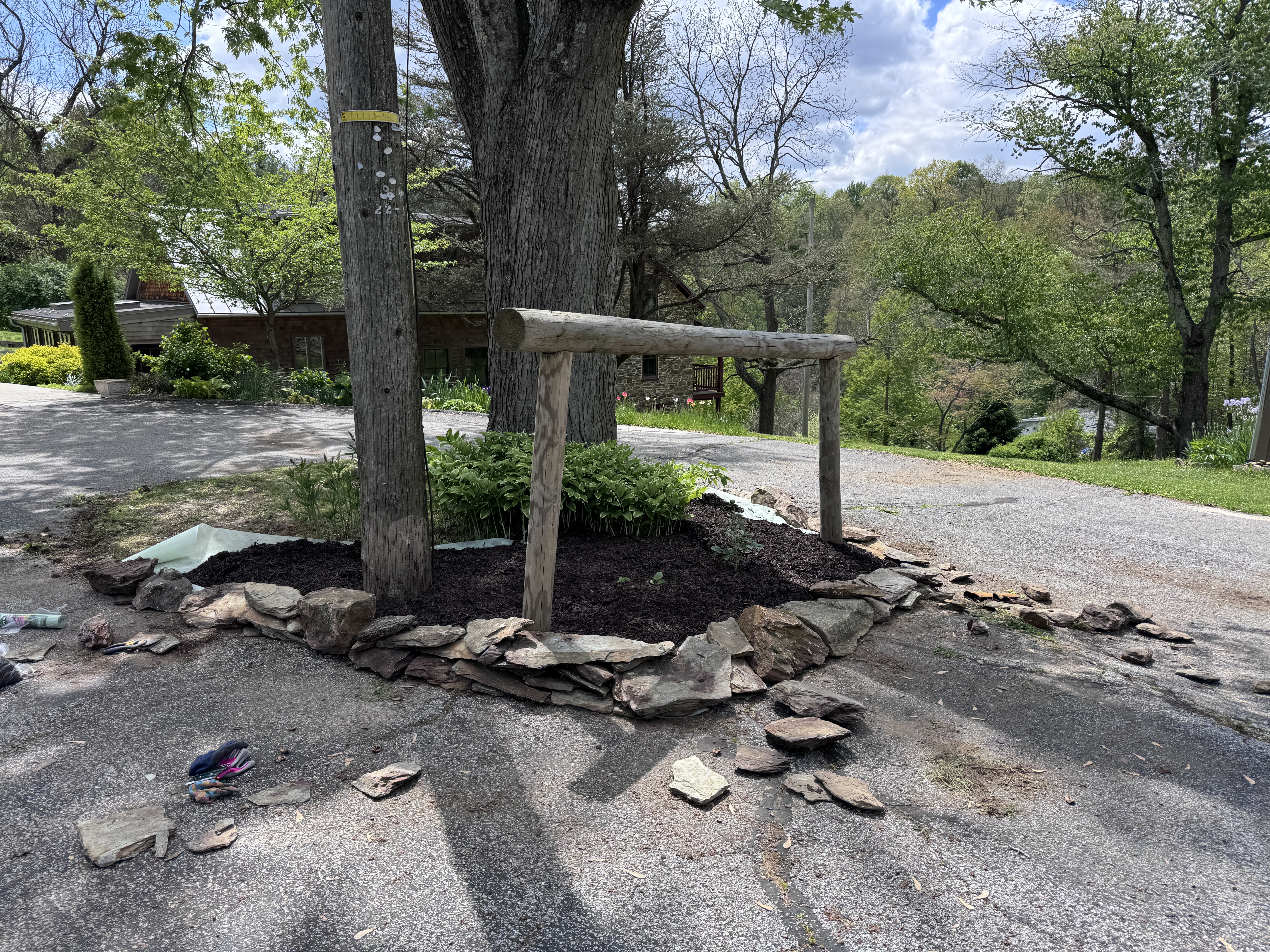
One stone exceeded the scope. It had been mostly buried in the front yard, held fast by years of soil and root. Getting it free took the tractor and a lot of determination. It now anchors the west arc of the wall. It'll stay there for the long term.
Fifteen bags of mulch raked even, worked to the inside face of each stone, and mounded gently toward the tree. With the wall partially set (still need to gather more large foundation stones and finish the south piece of it), we are happy with the way it looks this afternoon.
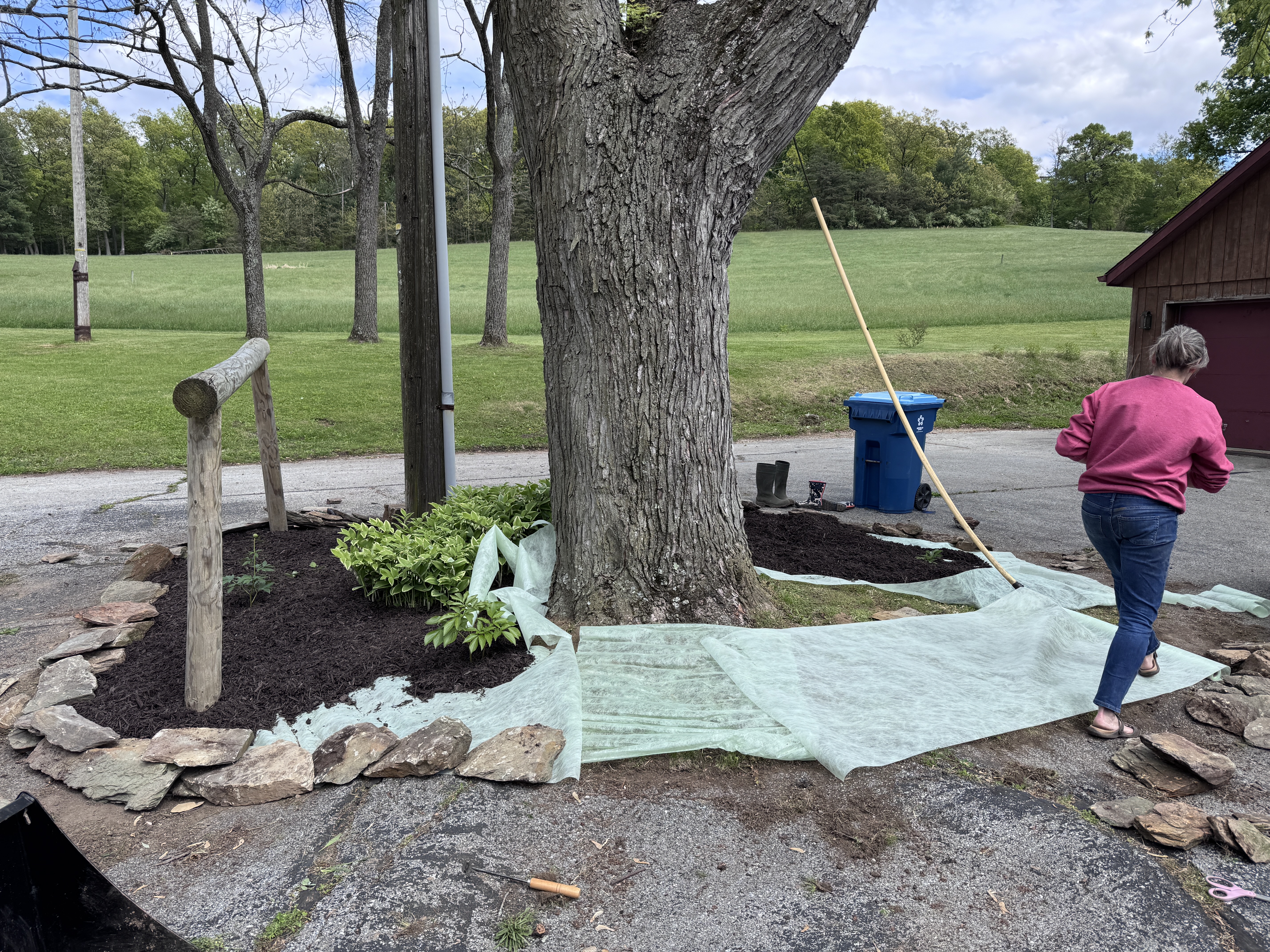
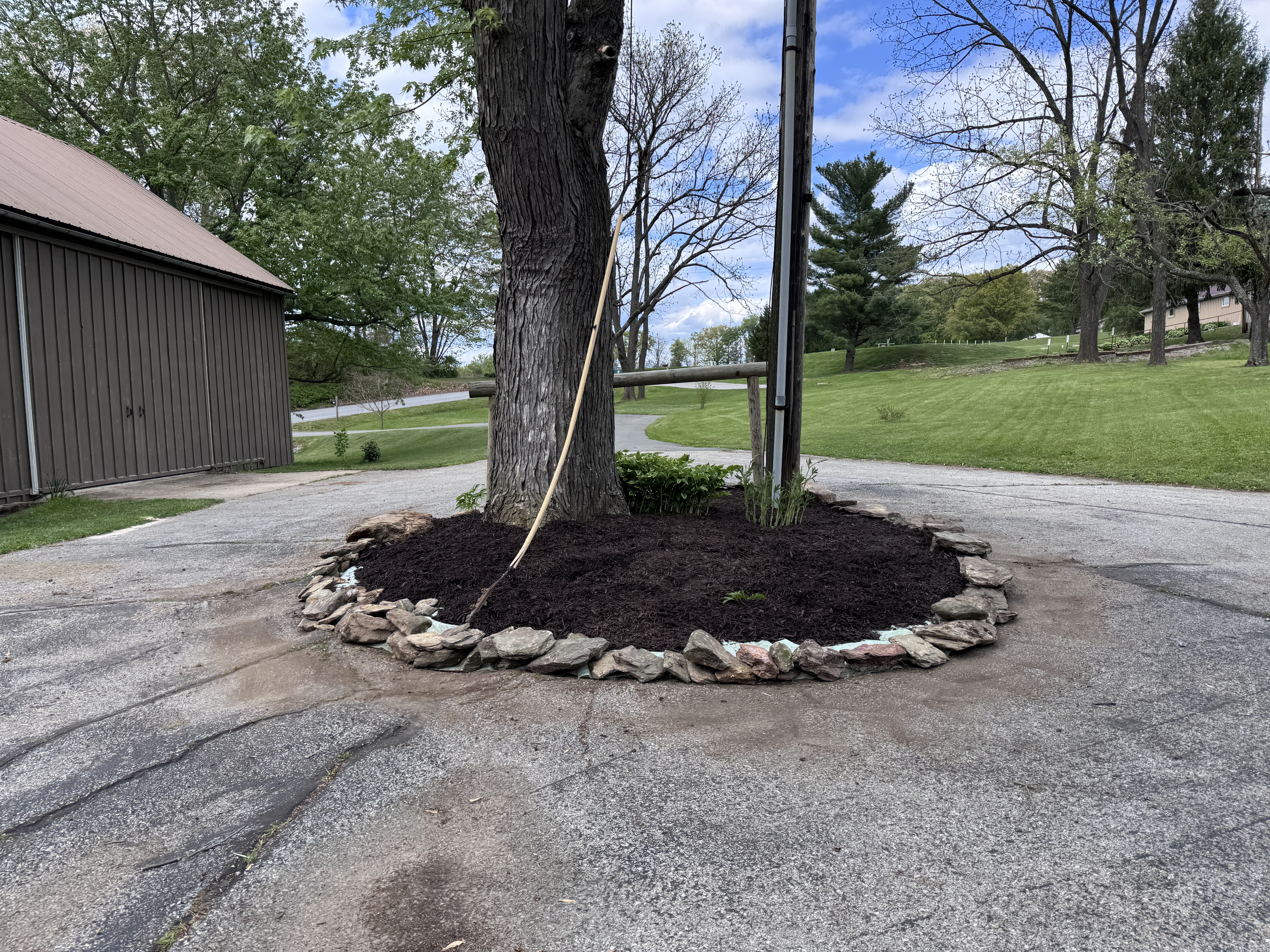
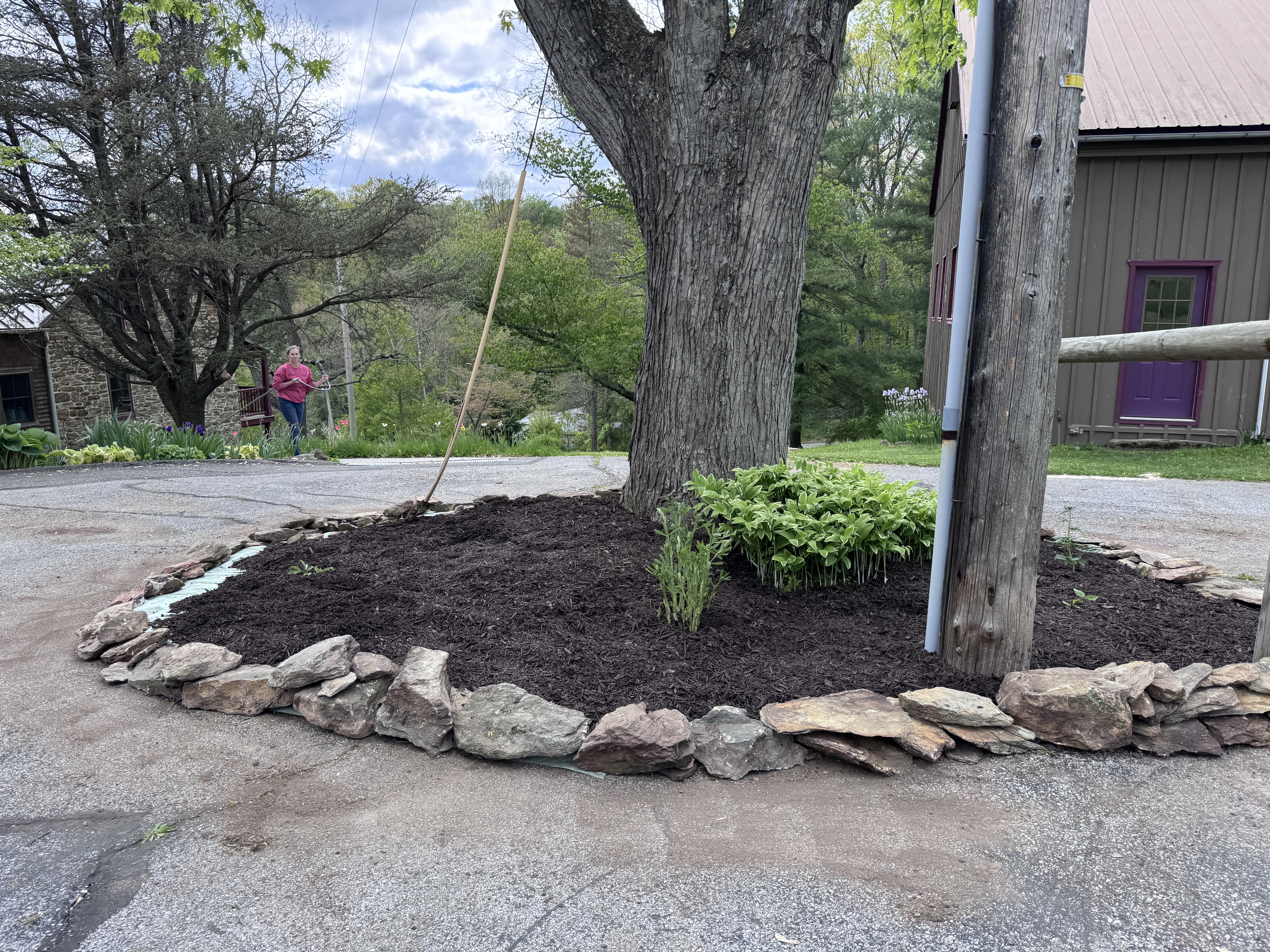
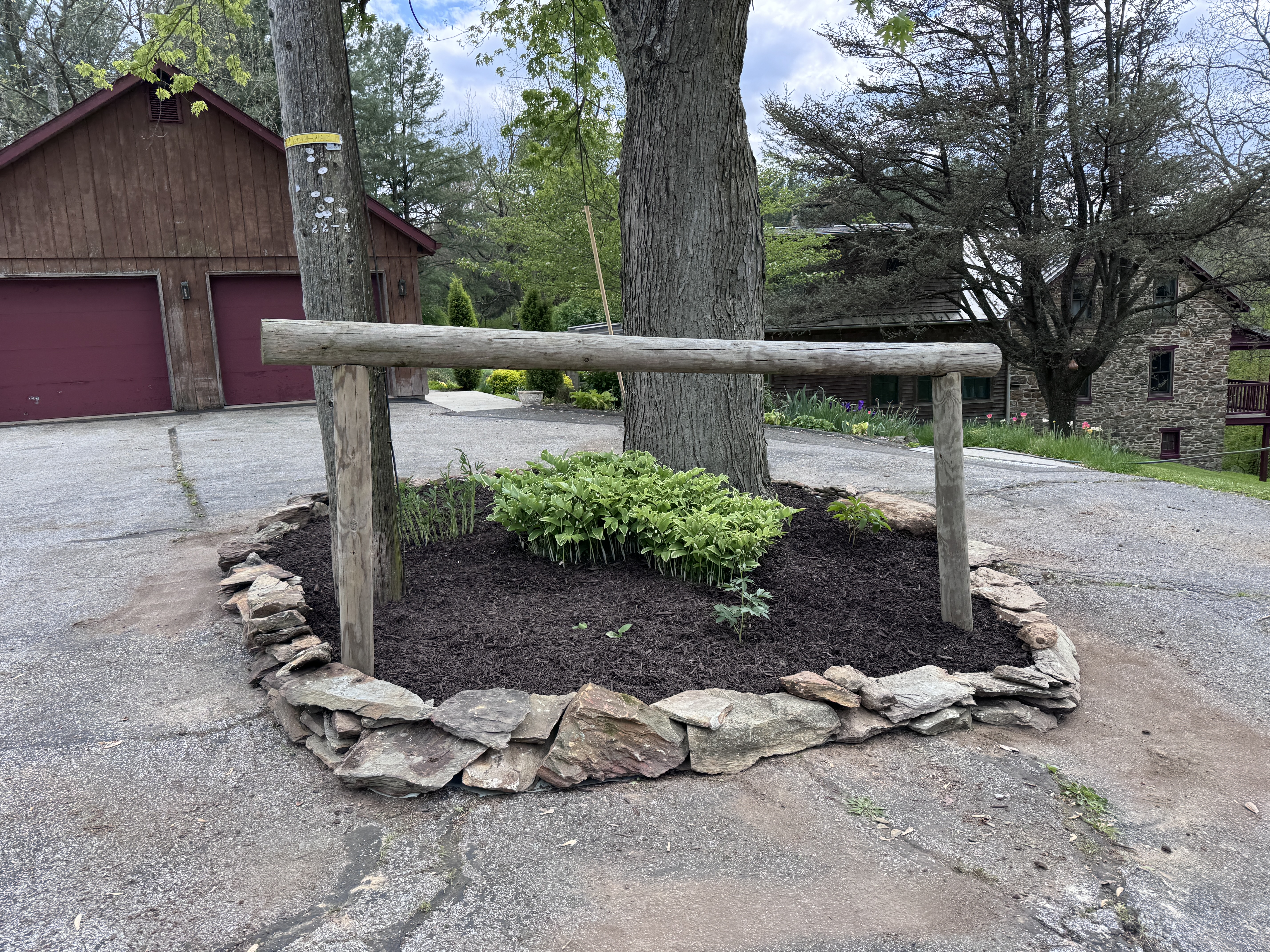
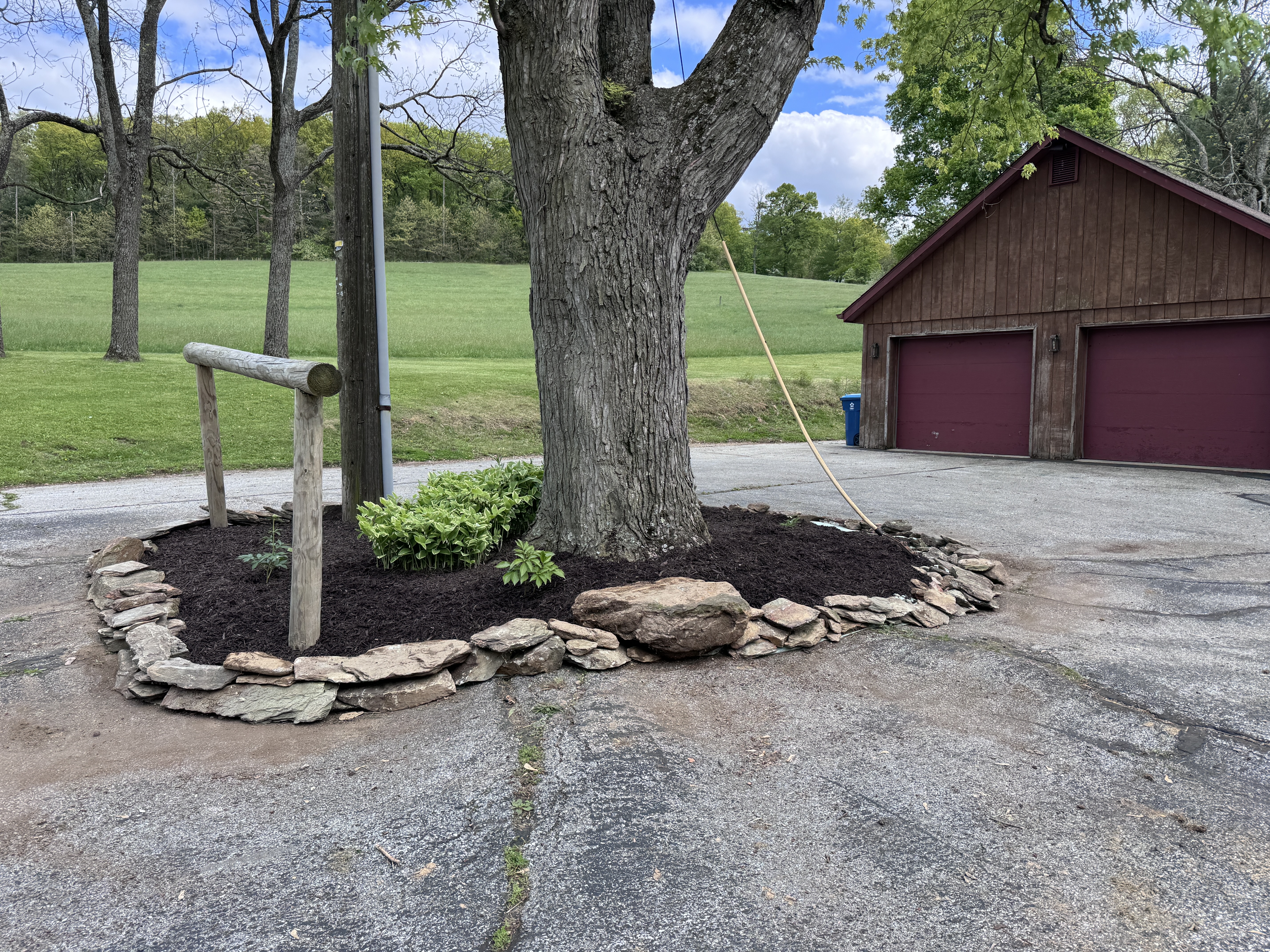
We loaded and unloaded stone until our arms gave out, then loaded more. We knelt on gravel for hours, crouched over roots, hauled a boulder that had no business being moved by two people and a compact tractor. By evening, every muscle had a detailed opinion about the day.
The island looks effortless now. It is not.
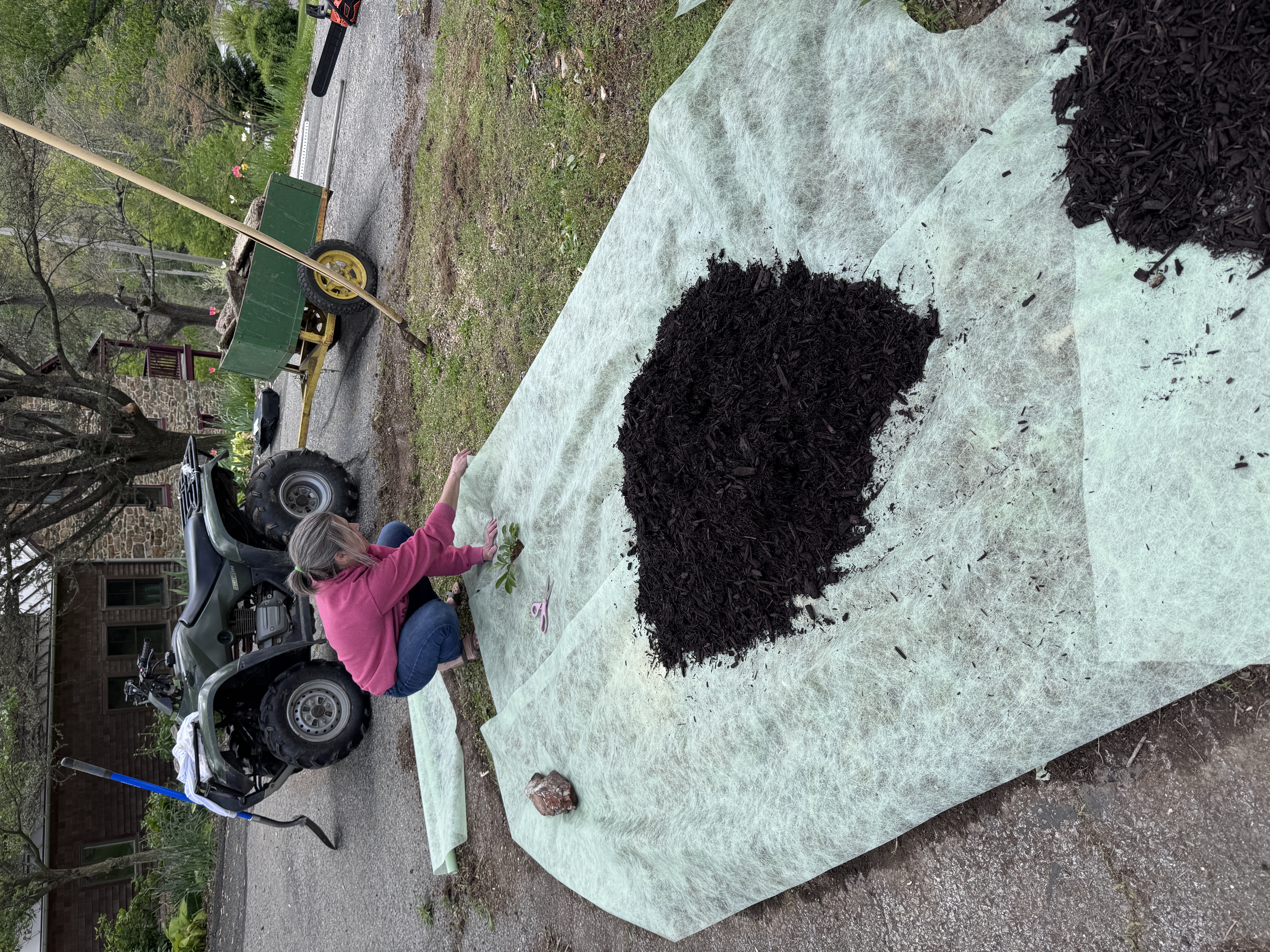
The wall needed better stone. Back into the woods to find it.
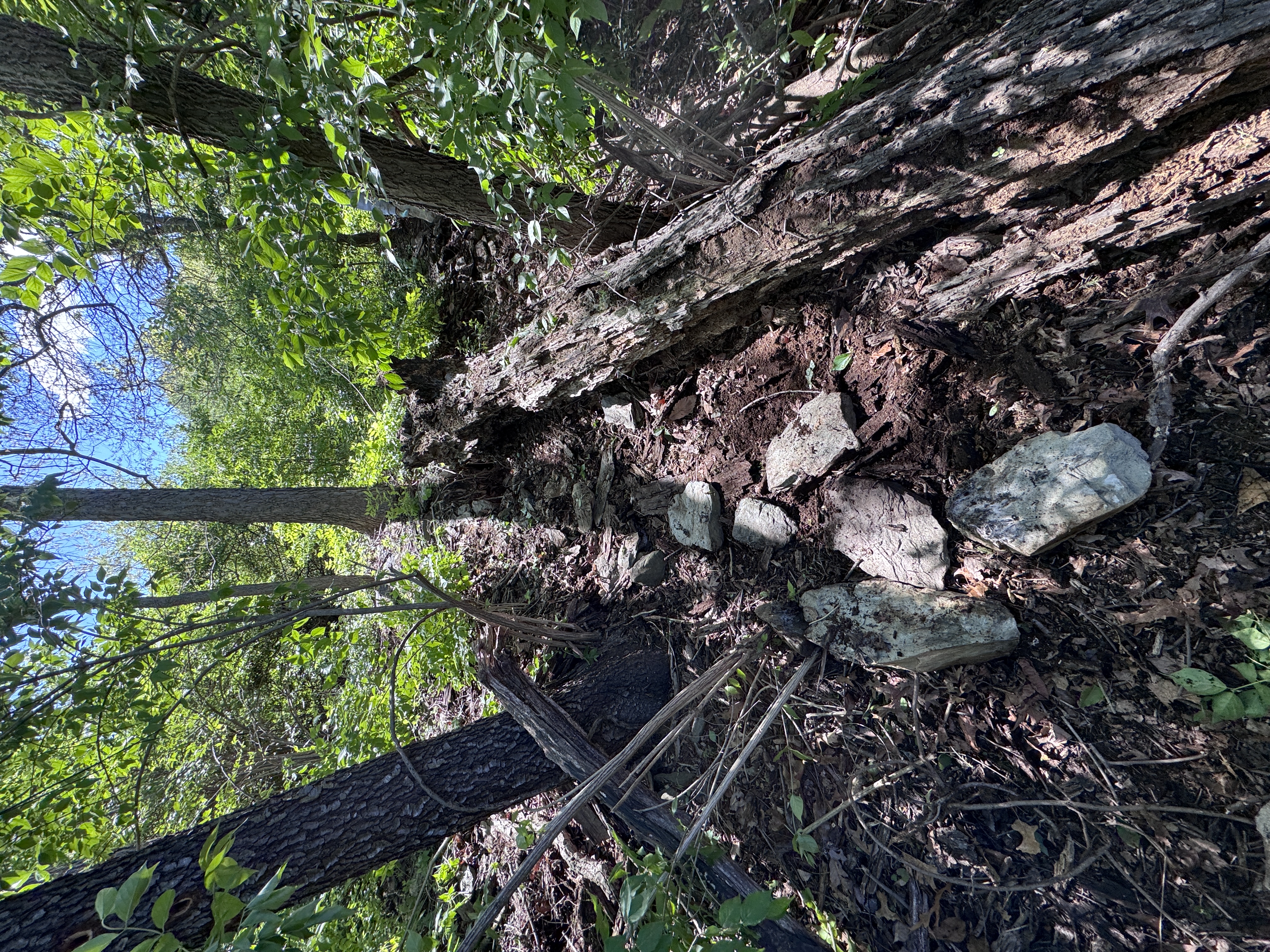
The wall we'd built on day one was a start, but the base course wanted something heavier — wider, flatter, with more face to show. The property's old fence lines still hold fieldstone in tumbled rows. We took the ATV back in and started pulling it out by hand.
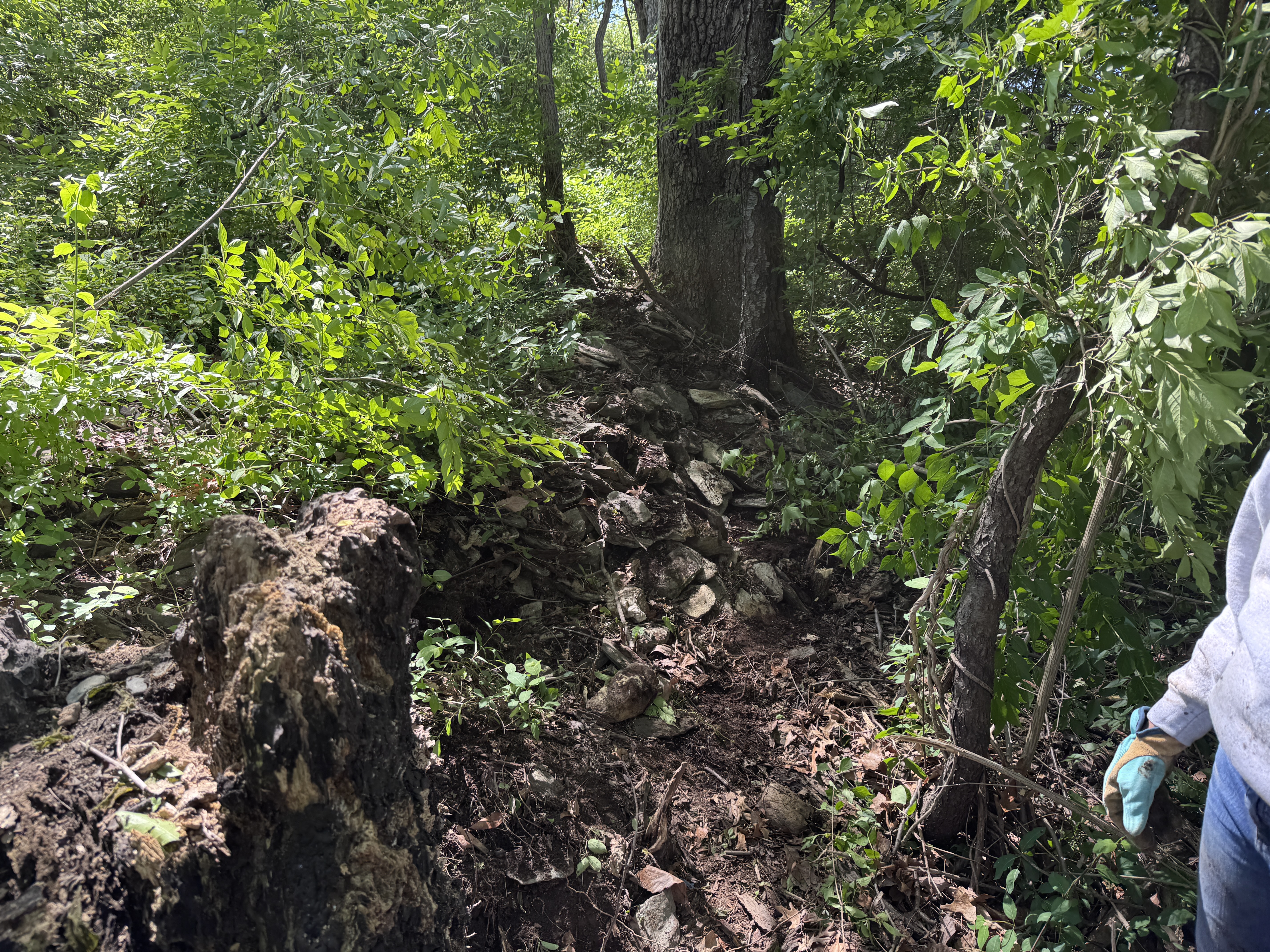
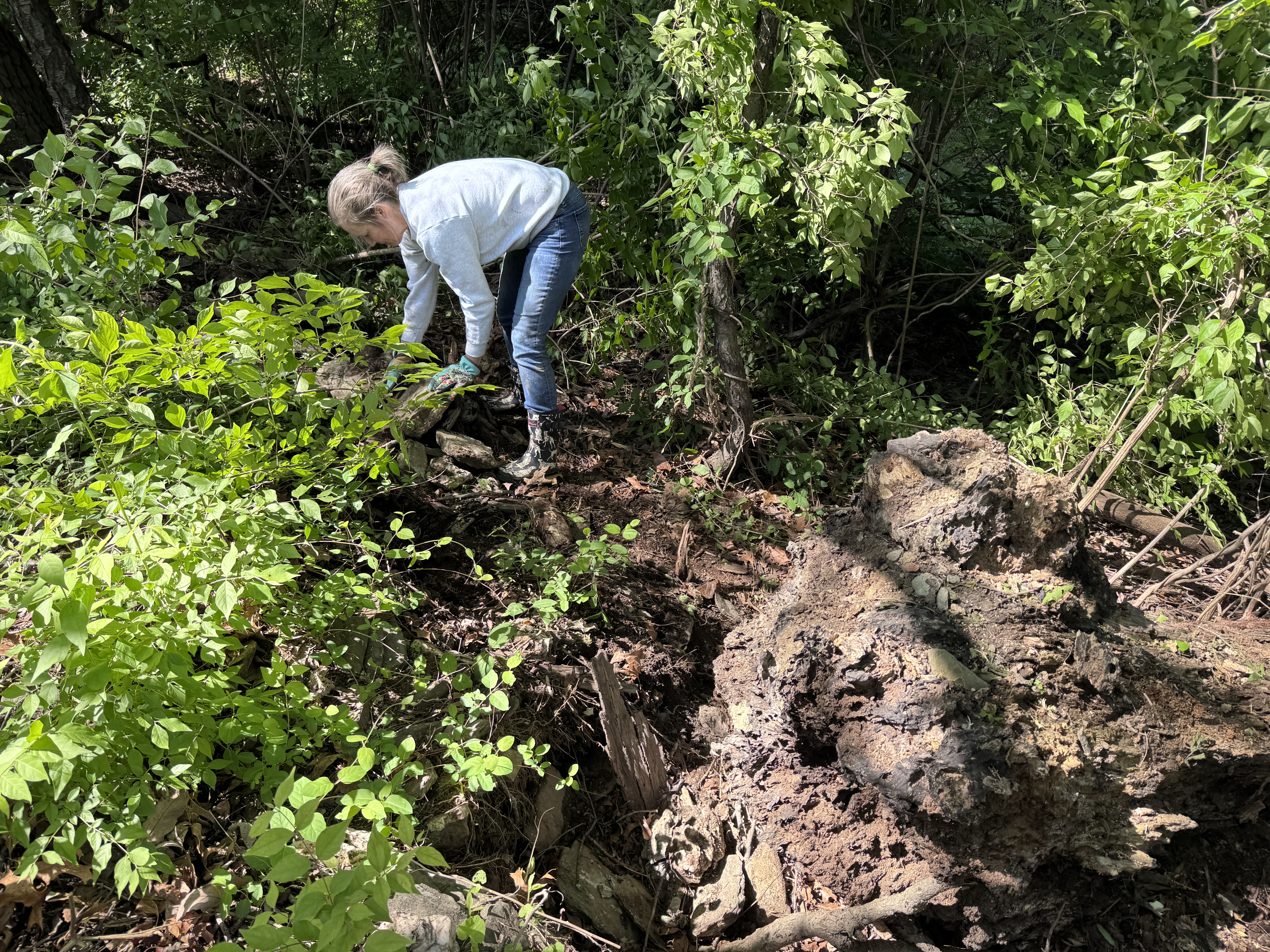
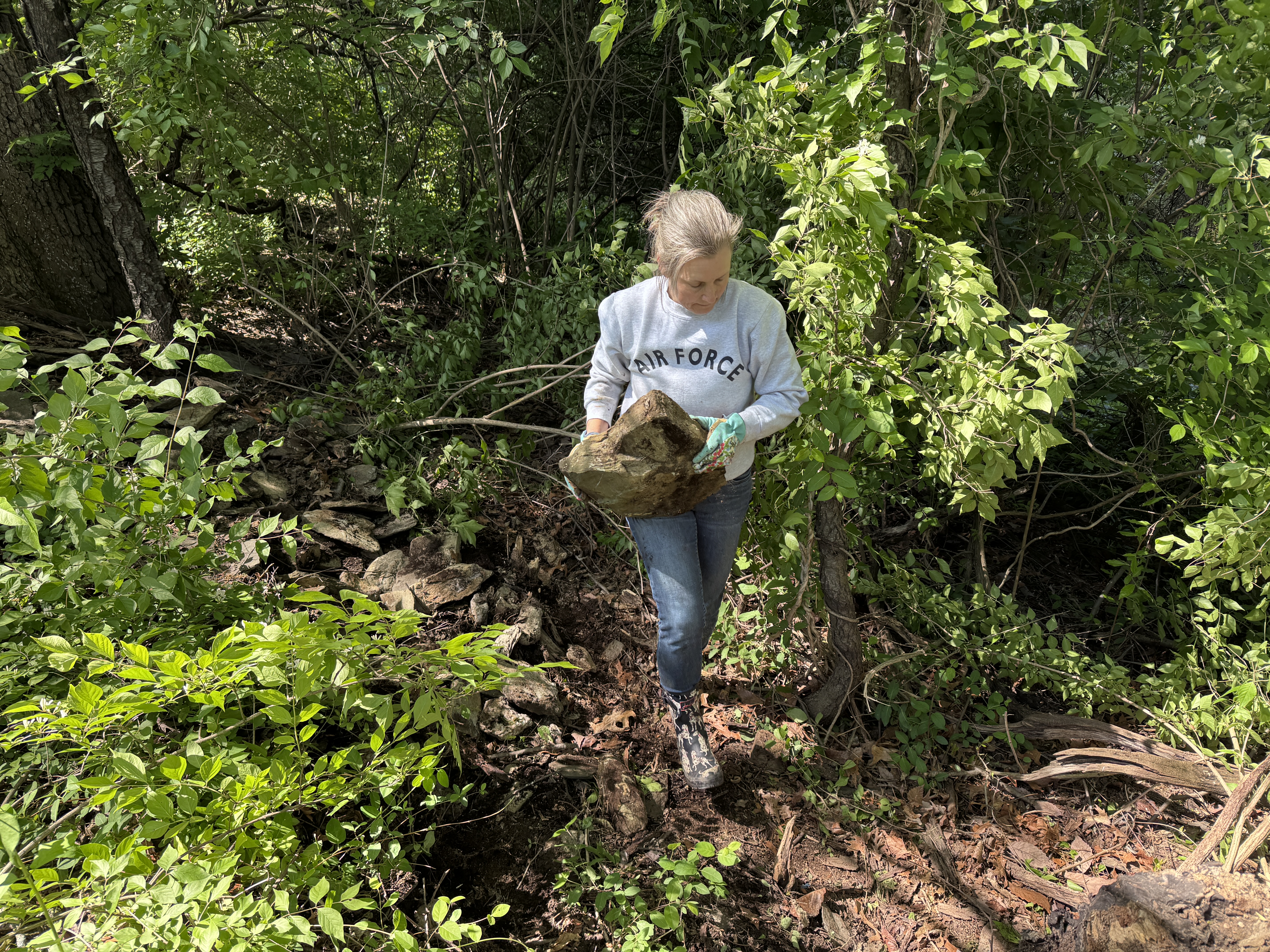
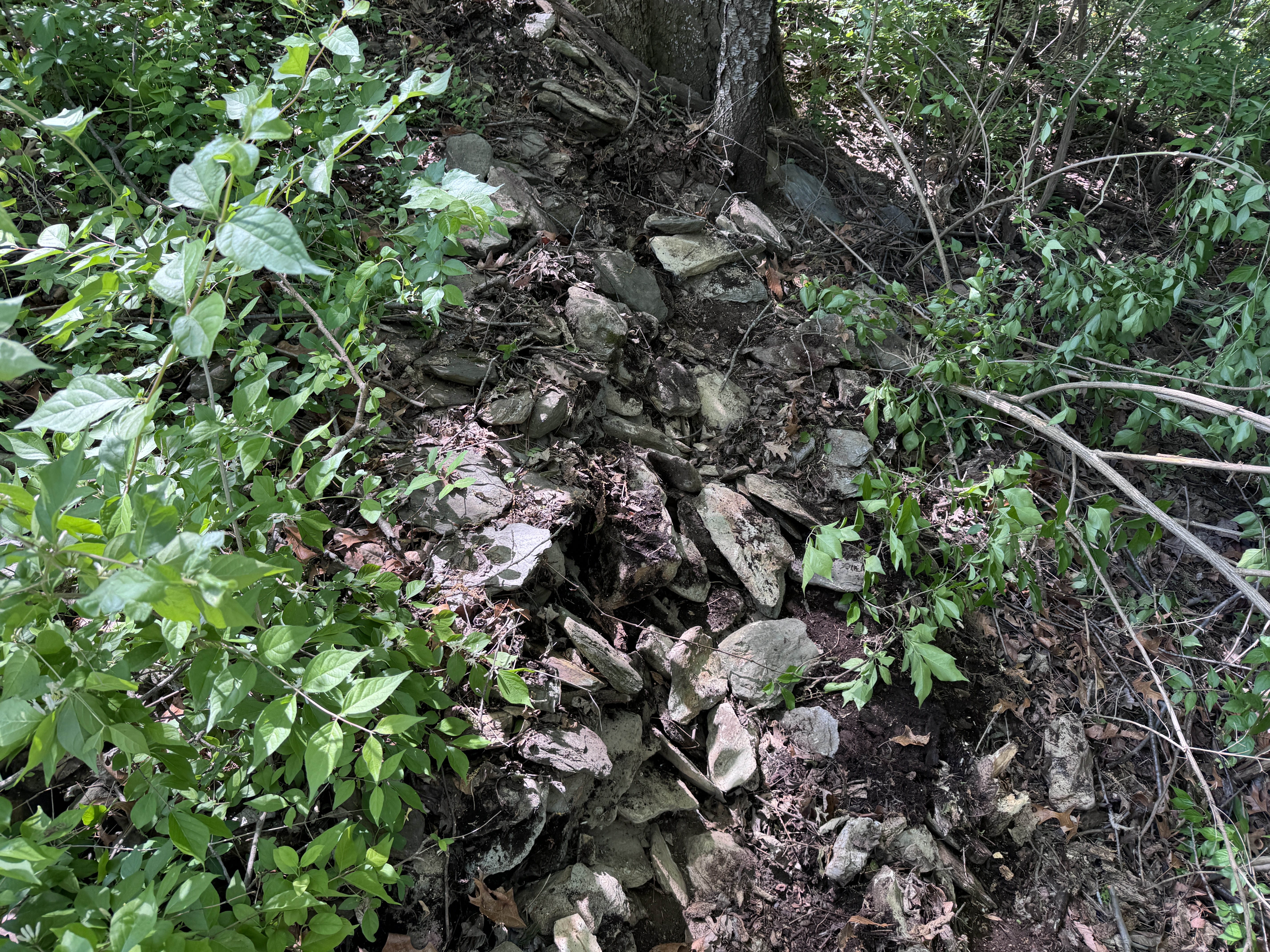
Back at the island, the new stone made its case immediately. Heavier pieces meant a lower center of gravity and a face that held. Amy reset sections of the ring course by course, choosing each stone for how it sat against its neighbors. Dry-stack doesn't lie — either a stone is right or it isn't.
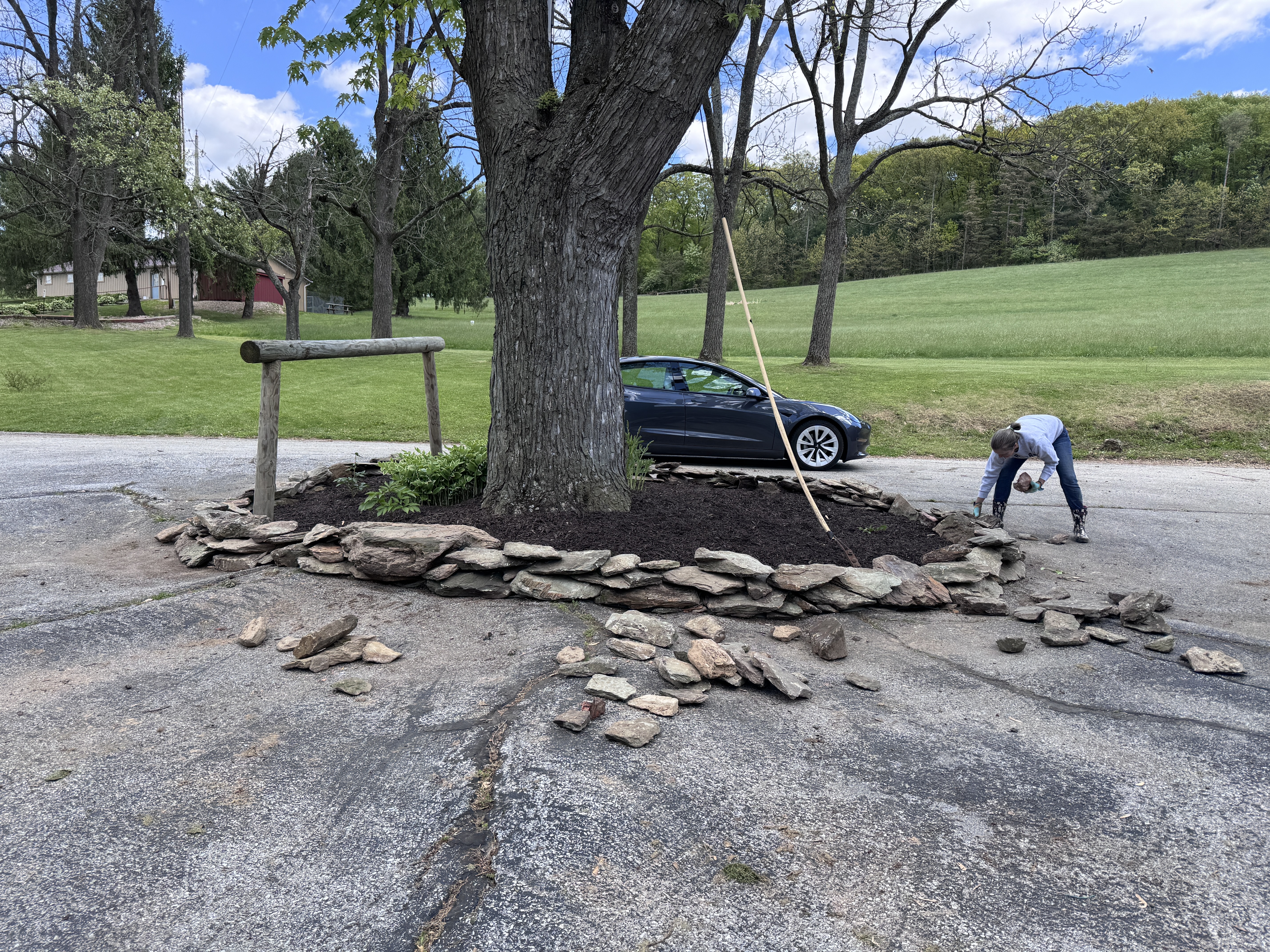
By early afternoon the wall was right — not decorative right, but structurally right. Heavy base stones, a level crown, a ring that won't shift with spring heave or winter frost. Two days, a woods full of old fence stone, and Murphy, who wandered over to inspect the work.